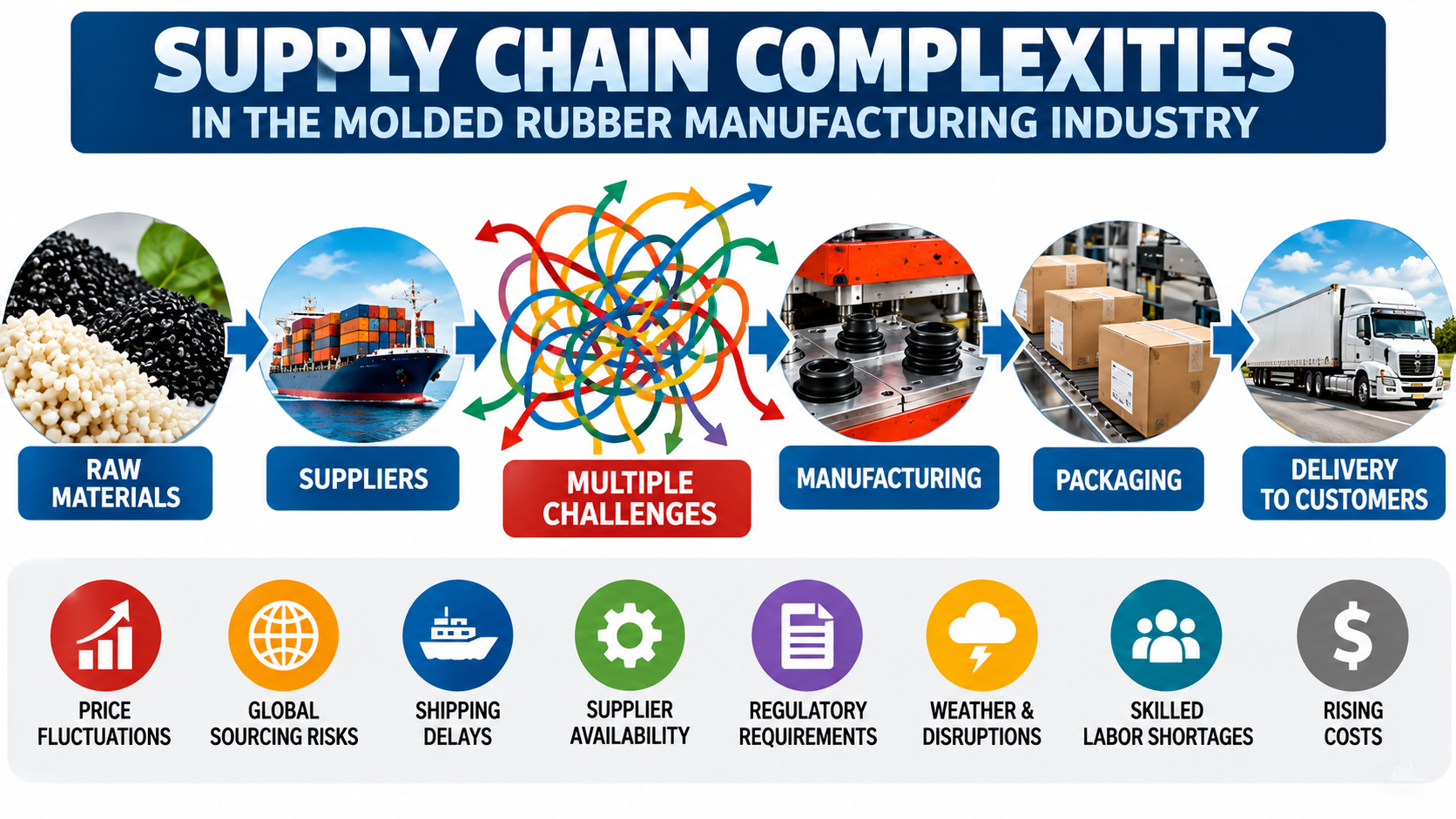
In today’s global market, supply chain complexities are a growing concern for manufacturers across industries. At Jefferson Rubber Works, we’ve navigated these challenges firsthand, learning valuable lessons along the way. Here’s our guide to tackling supply chain hurdles and ensuring your operations stay resilient and efficient.
-
Build Strong Supplier Relationships
The foundation of a resilient supply chain is the strength of your supplier partnerships. Regular communication, transparent expectations, and mutual trust go a long way. Nurture these relationships with site visits, joint planning sessions, and collaborative problem-solving to ensure reliability during disruptions.
-
Diversify Your Supplier Base
Relying on a single supplier or region increases vulnerability. Jefferson Rubber Works recommends evaluating alternative suppliers and diversifying your sourcing strategy. Having backup suppliers helps mitigate risks, such as geopolitical changes, natural disasters, or unexpected shutdowns.
-
Leverage Technology for Visibility
Invest in supply chain management software that provides real-time tracking of shipments, inventory levels, and production schedules. Enhanced visibility allows for proactive decision-making and quicker responses to disruptions.
-
Maintain Strategic Inventory Levels
While lean inventory practices optimize costs, consider maintaining buffer stocks of critical materials. Analyze usage patterns and identify components most susceptible to shortages. This approach can help bridge short-term disruptions without overextending resources.
-
Embrace Agile Manufacturing
Flexibility is key. At Jefferson Rubber Works, we invest in cross-training employees and modular production setups that can adapt to changing demands or material availability. Agile manufacturing enables rapid pivots to new products or processes when necessary.
-
Monitor Global Events and Trends
Stay informed about geopolitical, economic, and environmental issues that could impact your supply chain. Early awareness facilitates contingency planning and risk mitigation.
-
Foster a Culture of Continuous Improvement
Encourage feedback and innovation at every organizational level. Regularly review and refine your supply chain processes, inviting suggestions from employees, suppliers, and customers. Continuous improvement keeps your operations competitive and resilient.
Conclusion
Supply chain complexities are here to stay, but with proactive strategies, you can minimize risks and seize opportunities. At Jefferson Rubber Works, we’re committed to building robust supply chains that support our customers’ success. With strong partnerships, technology, and a culture of adaptability, manufacturers can thrive in even the most challenging environments.