
When it comes to designing a new part, it’s easy to get caught up in the excitement of innovation and problem-solving. However, one common pitfall that engineers and product developers face is over-engineering—a process where designs become unnecessarily complex, costly, or difficult to manufacture. At Jefferson Rubber Works, we’ve seen firsthand how streamlined, practical designs yield better results. Here’s how you can avoid over-engineering your next part design.
Clearly Define the Requirements
Start by outlining exactly what your part needs to do. What are the functional, structural, and performance requirements? Avoid the temptation to add features or specifications that don’t directly contribute to the part’s intended purpose.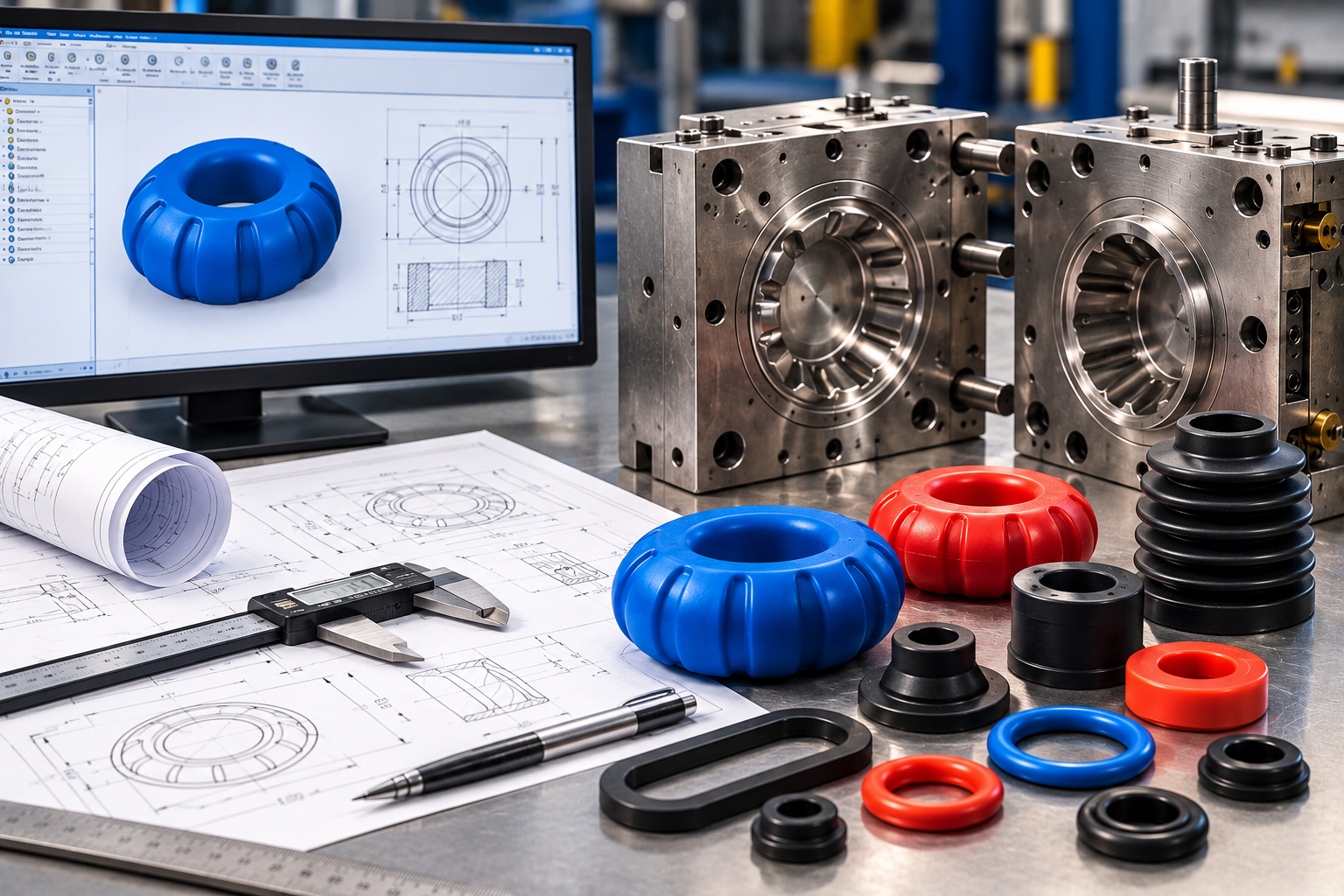
Involve Manufacturing Early
Engage your manufacturing partners early in the design process. Their practical knowledge can help identify potential production issues, material limitations, and cost-saving opportunities before your design becomes too complex.
Prioritize Simplicity
Simple designs are easier to manufacture, assemble, and maintain. Ask yourself: Can this part be simplified without compromising its performance or quality? Often, less is more.
Use Standard Materials and Processes
Whenever possible, design your part using standard materials and processes. Custom materials or intricate manufacturing methods can quickly drive up costs and lead times.
Prototype and Test
Prototyping allows you to validate your design before full-scale production. Use these tests to identify unnecessary features or complexities that can be eliminated.
Seek Feedback and Iterate
Get feedback from all stakeholders—designers, manufacturers, and end-users. Their insights can highlight areas where the design may be overly complicated or impractical.
Document Your Decisions
Keep a clear record of why certain design choices were made. This helps prevent feature creep and ensures that every element of the design serves a real purpose.
Conclusion
At Jefferson Rubber Works, we believe that effective part design is about meeting requirements in the simplest, most efficient way possible. By focusing on what matters and working closely with manufacturing experts from the start, you’ll avoid the pitfalls of over-engineering and create parts that are cost-effective, reliable, and ready for the real world.